Source Customized Bathroom Vanity Cabinet with Mirror and Basin for Home Hotel Bathroom
Find 30 listings for a customized bathroom vanity cabinet with mirror and basin featuring modern styles, ceramic basins, and marble countertops. Buyers can compare specifications, prices, and customization options from verified suppliers in Guangdong, China.
Key considerations
Products List


Comprehensive Sourcing Guide
Customized Bathroom Vanity Cabinet with Mirror and Basin Sourcing Guide
Sourcing a customized bathroom vanity cabinet that integrates a mirror and basin requires a disciplined approach to balancing aesthetic flexibility with structural integrity. The modern bathroom market demands solutions that are not only visually cohesive but also functionally robust, particularly when dealing with wall-mounted installations that must support significant weight. Buyers must navigate a landscape where customization options for materials, colors, and dimensions are abundant, yet these variables directly impact lead times, shipping costs, and long-term durability. This guide provides a structured framework for evaluating suppliers, verifying technical specifications, and ensuring commercial terms align with project requirements, ensuring that the final product meets both design intent and operational standards.
The procurement process for these units involves multiple layers of verification, from material composition to certification compliance. While the market offers a wide range of styles, from modern rectangular designs to square configurations, the core components—basin, cabinet, and mirror—must be evaluated as a unified system rather than isolated parts. Buyers should focus on understanding the supply chain dynamics, particularly regarding the origin of materials and the manufacturing capabilities of the supplier. By establishing clear criteria for quality control and after-sales support, purchasers can mitigate risks associated with international shipping, installation complexities, and potential defects in ceramic or stone components.
Product Scope and Observed Listing Signals
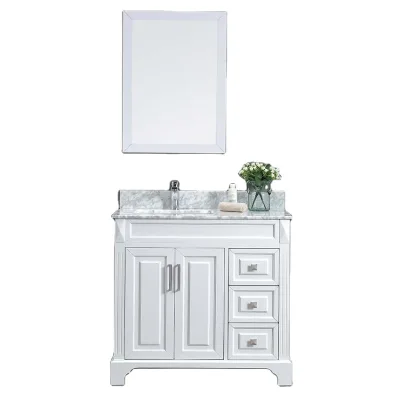
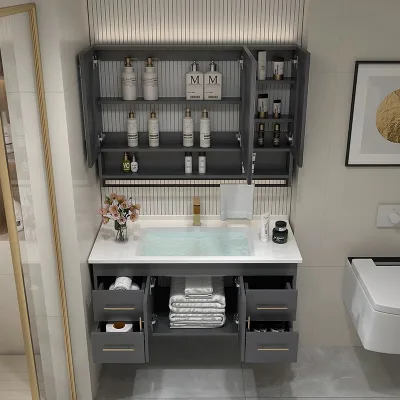
The current market for bathroom vanities presents a diverse array of configurations, with observed listings indicating a strong preference for wall-mounted units that combine ceramic basins with either marble or customized countertops. The material composition is a critical differentiator, with ceramics being the standard for basins due to their durability and ease of maintenance, while cabinet bodies often utilize melamine board or other engineered woods for structural stability. Buyers should note that customization is widely available, allowing for adjustments in color, such as white, gray, or bespoke finishes, and dimensions to fit specific spatial constraints. This flexibility is essential for projects requiring seamless integration into existing architectural designs, whether for residential homes or hospitality environments like hotels.
Observed listing signals reveal that suppliers typically offer complete sets including the mirror, basin, and cabinet, which simplifies the procurement process by ensuring component compatibility. The shape of the vanity varies, with rectangular and square options being prevalent, and dimensions often fall under 23 inches in width for compact installations or larger sizes for more spacious bathrooms. It is important to recognize that while many listings advertise customization, some may have limitations on the extent of modification allowed, particularly regarding the cabinet structure or countertop material. Buyers must carefully review the specific product attributes to determine if the offered customization aligns with their project’s unique requirements, avoiding assumptions that all listed features are universally applicable.
Technical Specifications to Verify
Verifying technical specifications is paramount to ensuring that the vanity cabinet meets the physical and functional demands of the installation site. Key dimensions such as cabinet size, typically ranging from 710x480x530mm to larger configurations like 84x50x74cm, must be cross-referenced with the available wall space and plumbing layout. The weight of the unit, often around 45kg for single items, necessitates robust wall-mounting hardware and structural support, especially for ceramic basins which add significant mass. Buyers should confirm the exact dimensions of the basin, countertop, and cabinet separately to ensure proper fitment, as discrepancies in these measurements can lead to installation failures or aesthetic mismatches.
The integration of the mirror and lighting is another critical technical aspect, with many units featuring integrated mirror lamps that enhance functionality and ambiance. Buyers must verify the electrical specifications of these lamps, including voltage compatibility and wiring requirements, to ensure they meet local safety standards. Additionally, the type of countertop material, whether natural marble or a customized alternative, should be assessed for its resistance to staining and water damage, as these surfaces are frequently exposed to moisture. The presence or absence of a water blocking plate is also a relevant detail, influencing the longevity of the cabinet’s internal components and the overall maintenance requirements of the vanity unit.
Compliance and Safety Documentation
Compliance with international and local safety standards is a non-negotiable aspect of sourcing bathroom vanities, particularly those involving electrical components like mirror lamps. Certifications such as CE mark the product as meeting European health, safety, and environmental protection standards, providing a baseline assurance of quality and regulatory adherence. Buyers should request valid certification documents from suppliers to verify that the products have undergone appropriate testing and inspection processes. This documentation is crucial for customs clearance and legal compliance in the destination market, ensuring that the imported goods do not pose risks to end-users or violate local building codes.
Beyond product certifications, buyers must also consider the safety implications of the materials used in construction. The use of melamine board for cabinets and ceramic for basins generally poses low health risks, but it is essential to verify that these materials are free from harmful chemicals and meet relevant environmental standards. The packaging method, whether 5-layer carton packing or carton with a wood frame, should be evaluated for its ability to protect the product during transit, preventing damage that could compromise safety or functionality. Ensuring that all components, including the mirror and basin, are securely packaged and labeled with appropriate handling instructions is vital for maintaining product integrity upon arrival.
Cost Drivers and Commercial Terms
The cost of customized bathroom vanity cabinets is influenced by several factors, including material selection, customization complexity, and order volume. Observed price ranges vary significantly, reflecting differences in quality, brand reputation, and the extent of customization offered. Buyers should analyze the cost breakdown to understand how changes in material, such as switching from standard marble to a customized countertop, impact the final price. Additionally, the supply ability of the supplier, often cited as 10,000 pieces or sets per month, indicates their capacity to handle large orders, which can affect pricing through economies of scale.
Commercial terms, including minimum order quantities (MOQ) and delivery times, play a crucial role in the procurement strategy. MOQs can range from 1 to 220 pieces, with some suppliers requiring a minimum of 10 pieces for customized orders, which may influence the feasibility of small-scale projects. Delivery times typically range from 20 to 30 days, depending on the level of customization and production schedule. Buyers should negotiate clear terms regarding payment methods, shipping responsibilities, and penalties for delays to protect their interests. Understanding these commercial dynamics allows for better budgeting and planning, ensuring that the procurement process aligns with project timelines and financial constraints.
Supplier Qualification and Quality Control
Evaluating supplier qualification is essential to ensure that the chosen partner can consistently deliver high-quality products that meet specified requirements. Buyers should assess the supplier’s manufacturing capabilities, including their production facilities, quality control processes, and experience in exporting to the target market. The ability to accept OEM/ODM requests indicates a supplier’s flexibility and commitment to meeting specific design and branding needs. Verifying the supplier’s track record through references or case studies can provide insights into their reliability and performance in previous projects.
Quality control measures should be established before production begins, including clear specifications for materials, dimensions, and finishes. Buyers should request samples or conduct factory audits to verify that the supplier’s quality standards align with their expectations. The warranty period, typically ranging from 3 to 5 years, is a strong indicator of the supplier’s confidence in their product’s durability. Additionally, after-sales service options, such as online technical support, should be evaluated to ensure that any issues arising post-installation can be addressed promptly. Establishing a robust quality control framework helps mitigate risks and ensures that the final product meets the desired quality benchmarks.
Long-Term Procurement Checks
Long-term procurement success depends on establishing ongoing relationships with suppliers who can adapt to changing market conditions and project requirements. Buyers should regularly review supplier performance metrics, including on-time delivery rates, product quality consistency, and responsiveness to issues. Maintaining open communication channels allows for timely resolution of problems and fosters a collaborative partnership. Regularly updating specifications and requirements ensures that the sourced products remain aligned with evolving design trends and functional needs.
It is also important to monitor market trends and technological advancements in bathroom vanity manufacturing to identify opportunities for improvement or cost savings. Engaging in periodic reviews of commercial terms and supplier qualifications helps maintain competitive pricing and high-quality standards. By staying informed about industry developments and maintaining a proactive approach to supplier management, buyers can ensure that their procurement strategy remains effective and resilient over time. This long-term perspective enables sustained success in sourcing customized bathroom vanity cabinets that meet both current and future project demands.
FAQs
Can I customize the color and countertop material?
Yes, customization is available for both color and countertop. You can choose from white, gray, or other customized options. The countertop material can be marble or customized to your preference. This allows you to tailor the bathroom vanity cabinet with mirror and basin to match your specific interior design requirements.
What are the standard cabinet dimensions available?
Standard dimensions vary by model. One common size is 710x480x530mm, while others include 84x50x74cm and 95x80x56cm. The width is typically under 23 inches. These specifications ensure the unit fits standard bathroom layouts while providing adequate storage space for your needs.
What is the minimum order quantity for this product?
The minimum order quantity is 10 pieces. This MOQ applies to the customized bathroom vanity cabinet with mirror and basin. It allows buyers to test the product quality or order small batches for specific projects without committing to large volumes initially.
How long does delivery take after ordering?
Delivery time is typically 20 to 30 days. This lead time applies after order confirmation. It accounts for production and packaging processes. Buyers should plan their installation schedules accordingly to ensure the bathroom vanity cabinet with mirror and basin arrives in time for their project completion.
What certifications does the product hold?
The product holds CE certification. This indicates compliance with European health, safety, and environmental protection standards. It provides assurance for buyers importing into regions requiring such documentation. The bathroom vanity cabinet with mirror and basin meets these regulatory requirements for safe use.
What warranty is provided for the cabinet?
Warranty periods vary by model, offering either 3 or 5 years. This coverage protects against manufacturing defects. Buyers should verify the specific warranty terms for their selected model. The bathroom vanity cabinet with mirror and basin is backed by this support for long-term reliability.